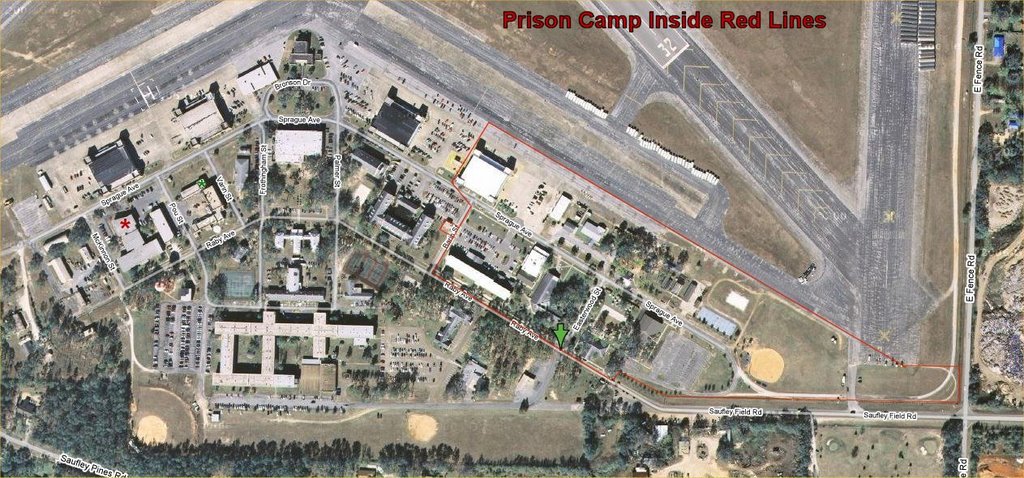
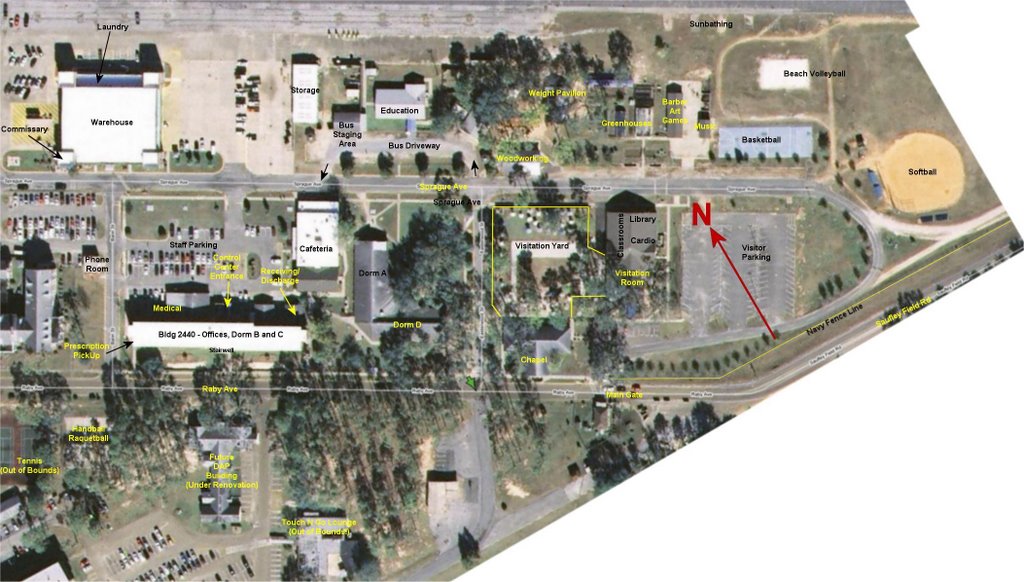
Prisoners are persons whom most of us would rather not think about. Banished from everyday sight, they exist in a shadow world that only dimly enters our awareness. They are members of a "total institution" that controls their daily existence in a way that few of us can imagine. "[P]rison is a complex of physical arrangements and of measures, all wholly governmental, all wholly performed by agents of government, which determine the total existence of certain human beings (except perhaps in the realm of the spirit, and inevitably there as well) from sundown to sundown, sleeping, walking, speaking, silent, working, playing, viewing, eating, voiding, reading, alone, with others. . . ." It is thus easy to think of prisoners as members of a separate netherworld, driven by its own demands, ordered by its own customs, ruled by those whose claim to power rests on raw necessity. -- Justice William Brennan, dissenting in O’Lone v. Estate of Shabazz, 482 U.S. 342, 354-55 (1987).

Tuesday, April 8, 2008

Enron: Deconstructing the Myths

[This post contains many links for those readers who wish to explore this matter more. There is simply no way I can possibly cover this topic myself in a single article.]

I recently discovered a wonderful blog called Houston's Clear Thinkers by Houston lawyer Tom Kirkendall. Among many other topics, he decries "the increasing criminalization in American society of ordinary business practices." So much of what he says, from the more professional/academic perspective of a lawyer, echoes the stories I heard in prison. There are SO MANY men sentenced to YEARS in prison for conduct that AT MOST should be a civil offense (mine included, although it is a trivial example). It seems all that is required to form the basis of a fraud case is a disgruntled customer, employee, or investor, or other "victim" of a business decision gone bad.

(As an aside, there is a lesson here: business people should bend over backwards to address and resolve grievances before the "aggrieved" escalate their problem to the government. Rarely does a perceived "vicitm" call the feds before first attempting to get relief from the business. Many guys end up in prison, not because their conduct was fraudulent, but because they were arrogant jerks who were "right" and refused to satisfy the concerns brought to them. It pays to be nice.)

In particular, Kirkendall has done a great job deconstructing the popular myths concerning Enron and anyone associated with it (e.g. Arthur Anderson). See all of his Enron articles here, which includes The Enron Task Force Laid Bare (3/24/08) demonstrating "what is wrong with the Department of Justice's regulation of business-through-criminalization approach in the post-Enron era."

For example, commenting on Jeffrey Skilling's sentencing hearing (back in 2006), he says:

"By now, we all know the myth -- Enron was merely an elaborate financial house of cards that a massive conspiracy led by the greedy and lying Skilling and the late Enron chairman Ken Lay hid from innocent and unsuspecting investors and employees. The Enron Myth is so thoroughly accepted that otherwise intelligent people reject any notion of ambiguity or fair-minded analysis in addressing facts and issues that call the morality play into question. The primary dynamics by which the myth is perpetuated are scapegoating and resentment, which are common themes of almost every mainstream media report on Skilling and Enron ."
After witnessing the incredible human cost of the Enron prosecution, it appears that much of the work of the Enron Task Force is unraveling.

Perhaps the most shocking example is the trial of Jeffrey Skilling and Ken Lay. Skilling's appeal describes in excruciating detail the shocking level of prosecutorial abuse. If their claims are true, and it is hard to see how they cannot be true, it is the prosecutors, not Skilling, that should be in prison.

Kirkendall's summary, "The Stench of Prosecutorial Abuse," is MUST reading. He includes a link to Skilling's supplemental brief (which I read while watching the NCAA basketball championship game last night... who says men can't multi-task!) that details the abuses, which essentially involves the government intentionally scripting Andrew Fastow's testimony (almost the entire case against Skilling came down to whether you believed Fastow or Skilling) as well as withholding clear exculpatory evidence (the notes from Fastow's original interviews which "evolved" after his plea deal) confirming Skilling's testimony and incriminating Fastow's.

Furthermore, echoing a tactic I heard about in prison, but found hard to believe, the government identified over 100 unindicted co-conspirators in the Lay-Skilling case.

What does this mean?

An unindicted co-conspirator is someone the government believes was part of the conspiracy but chooses not to prosecute, usually because they were a relatively small player in the conspiracy and they "cooperated" with the government. Implicit however in such a status is the threat that co-conspirators will not remain unindicted for very long if they cooperate with the defense (e.g. by consenting to be deposed) because they might provide testimony that impeaches the prosecution's main witnesses. (Unindicted co-conspirators only provide background cooperation, they do not actually testify at a trial, because that exposes them to cross-examination, something the prosecution does not want.)

What if the defense wishes to call one of these unindicted co-conspirators as a witness (in order to either provide exculpatory testimony or impeach the testimony of a prosecution witness)?

Well, that witness's lawyer will (correctly) instruct his client to claim his 5th amendment right against self-incrimination, knowing that the government will prosecute his client for testifying.

You might ask? Well that's better than nothing. After all, when the jury hears all these witnesses taking the 5th amendment in response to defense questioning, they will get the hint and realize that the defendant is innocent (or, at least, the government hasn't proven its case).

Wrong.

When a judge is informed in advance that a witness is going to "take the 5th," the rules forbid the judge from letting that witness take the stand. Nice... so the jury never knows that these people exist.

Thus, the effect of the government identifying over 100 unindicted co-conspirators is that Lay-Skilling cannot depose or otherwise utilize the testimony of these individuals, who very well could provide exculpatory testimony. Of course, if the prosecutor is aware of ANY exculpatory evidence, they are required to turn it over to the defense. At least, that's the theory.

(One day, I will tell the full story of a fellow inmate who suffered a similar injustice, when a witness with exculpatory testimony was named an unindicted co-conspirator by the government. This man, a devout Mormon, father of 7, married for 30+ years is in prison for 4 years for being the outside accountant of a company that hired illegal immigrants. He was convicted of conspiracy to harbor illegal immigrants. Horrible, horrible case.)

Skilling's lawyers have asked for his case to be dismissed with prejudice (that is, the government cannot retry him). In the words from their supplemental brief:

"Skilling's life has been destroyed. His ability to receive a fair trial has been irretrievably lost....Even more important than punishing the government, however, dismissal with prejudice is necessary to remedy the grave injustice and prejudice to which Skilling has been subjected. Skilling was forced to spend tens of millions of dollars defending against the largest criminal investigation in the history of the Department of Justice. He was forced to sell his home and virtually all his personal possessions. The rest of his assets have been frozen. His family has been subjected to ridicule, scorn, and physical threats. Skilling had restricted bond provisions for years, enhanced bond provisions through trial, and subjected to home confinement for six months after conviction. He has been incarcerated in federal prison for 15 months, during which both his parents passed away. He was compelled to defend himself in the face of the Task Force’s intransigent refusal to disclose exculpatory evidence. His attorneys have fully disclosed his defense theories and strategies. Worst of all, the jury pool has been hopelessly tainted by countless reports calling
Skilling’s conviction 'justice,' 'closure', and a badly needed 'exorcism.'”

I will close with an editorial comment by Kirkendall:
"I've often noted on this blog that fair-minded people can disagree over whether the government's prosecutorial power is an appropriate tool to regulate business. However, my fervent hope is that even those who favor using the state's awesome power to criminalize merely questionable business transactions will be appalled by what the prosecution did in the criminal case against Skilling and Lay, as well as the other Enron-related criminal cases. In truth, none of us would be able to survive, as Thomas More reminds us, "in the winds that blow" from the unjust exercise of the government's overwhelming prosecutorial power. I continue to hope that Jeff Skilling's unjust conviction and sentence are reversed on appeal, not only for his and his family's benefit, but also for ours."

AMEN.

Sunday, April 6, 2008

Prison Talk Article

The New York Times Magazine has an interesting article about Prison Talk, an internet discussion forum with 150,000 members and 2,500 readers per day that caters to an "underserved consumer niche: family and friends of the incarcerated."

If you have found my blog, you surely are already aware of Prison Talk but I thought you might be interested in reading what NYT Magazine has to say.

Friday, April 4, 2008

Spitzer and Financial Privacy

I generally don't like to use my blog to comment on public issues unless I think my "rabbit hole" experience provides me a perspective that is not emphasized by mainstream commentators. That happens to be the case with the recent Eliot Spitzer scandal/tragedy. (It is a public scandal but personal tragedy.)

I was never a big Eliot Spitzer fan. He struck me as a bully who, as state Attorney General, used abusive methods to prosecute abusive practices on Wall Street (ends justify the means). Many viewed him as a hero for taking on Wall Street, but whatever merit there was in his cause, his "take-no-prisoners," heavy-handed application of the law and his office were offensive to me. The abuses of private businesses never scare me as much as the abuses of government officials, because private businesses ultimately do not threaten my liberty or livelihood. In addition, I can disassociate myself from private businesses; it is difficult to run from the government.

Like most, I agree that Spitzer's personal conduct was highly regrettable (in addition to being rather hypocritical, given the degree of self-righteousness on which he based his public image). He made the right decision by quickly resigning for disgracing the governorship.

However, having said all that, I find the Dept of Justice's conduct in this matter far more troubling than Spitzer's. Or, perhaps, I should say I find the laws that the DOJ are enforcing are more troubling, from the Bank Secrecy Act to the Money Laundering Control Act to the Patriot Act.

Newsweek briefly commented on the Unintended Consequences of the Patriot Act leading to Spitzer's downfall, while the NY Times describes some of the government's intrusiveness in this story, although it focuses more on the wiretaps and tailing. I want to focus more on the invasion of financial privacy that the government has authorized since 1970 and has increased with the Patriot Act.

I am not sure most people understand how Spitzer was actually caught because it was the reverse of what normally happens when you bust a prostitution ring. Normally, the ring is busted first and then the "johns" are discovered later. In this case, the "john" (i.e. Spitzer) was busted and then traced to the protitution ring. This was accomplished due to something called the misnamed Bank Secrecy Act of 1970, which was intended to fight money laundering by organized crime and, later, drug traffickers and terrorists, but has become the primary means through which the government spies on your financial life. Indeed the Bank Secrecy Act and it amendments requires your bank, under threat of significant civil and criminal penalties, to spy on its customers.

Initially, it did this by requiring banks to file Currency Transaction Reports (CTRs) for transactions over $10,o00 to the US Treasury, but it has extended to where banks are required to "know your customer" (KYC) to the point that they must install sophisticated software (in addition to training tellers and staff) to monitor customer transactions and report any "suspicious" activity to the government through Suspicious Activity Reports, which are filed with a bureau of the US Treasury call the Financial Crimes Enforcement Network. The following startling broad requirement will trigger a SAR:

"The transaction has no business or apparent lawful purpose or is not the sort in which the particular customer would normally be expected to engage, and the financial institution knows of no reasonable explanation for the transaction after examining the available facts, including background and possible purpose of the transaction"


That is how Spitzer got caught.

His bank identified transactions that were "suspicious" (Newsday does a good job of providing the details here). It appears that Spitzer, among other things, was attempting to structure his wire transfers in smaller amounts in order to avoid the $10,00 CTR reporting requirement. Just in case you were wondering, this is also a crime called "structuring." In other words, if you intentionally make sure your transactions are always below $10,000 because you don't like the idea of the government snooping around your financial life, then you have broken the law! Attempting to avoid a reporting requirement, even if there is no underlying criminal activity, is itself a federal crime.

It may well be that Spitzer knew about the Currency Transaction Reports that banks are required to file (for transactions over $10,000) but was unaware of Suspicious Activity Reports. The irony is that had he simply wired the $10,000+ instead of breaking it down, the CTR that would have been filed would likely have raised no suspicions with the US Treasury. This is because 15 million CTRs are filed every year, wherease only about 1 million SARs are filed. CTRs are automatic but SARs require judgment on the part of the bank so SARs automatically draw more suspicion than CTRs. (See this law.com article for more details.)

In any case, his bank filed a SAR and because he was also a PEP ("politically exposed person"... seriously, banks must rank the suspiciousness of each customer!), it drew the attention of a treasury agent, who thought these transaction might be tied to political corruption (payoffs, blackmail, etc). There was no suspicion that Spitzer was patronizing a prostitution ring at the time, but that is where the investigation led.

So how do you find out if your bank has filed a CTR or SAR on you?

YOU CAN'T!! It is illegal for your bank to tell you!

I don't know about you, but the realization that MY BANK is required to SECRETLY spy on me for MY GOVERNMENT does not sit well with me.

I thought "How can the Bank Secrecy Act possibly be constitutional? How can the government compel my bank to turn over my financial records without my knowledge and without a search warrant?" Well, it turns out that I was not the first to think that. In 1976, the Supreme Court ruled that it is NOT unconstitutional although Justice Douglas wrote, in dissent:
"It is, I submit, sheer nonsense to agree with the Secretary that all bank records of every citizen ‘have a high degree of usefulness in criminal, tax, or regulatory investigations or proceedings.’ That is unadulterated nonsense unless we are to assume that every citizen is a crook, an assumption I cannot make," Justice Douglas concluded. He added, "A mandatory recording of all telephone conversations would be better than the recording of checks under the Bank Secrecy Act, if Big Brother is to have his way." [AMEN!]

Apparently, when you turn over your information to a 3rd party, you FORFEIT your 4th amendment rights over that information, including your banking records.

This decision was so startling that Congress passed the Right to Financial Privacy Act two years later, but specifically exempted the Bank Secrecy Act requirements, a rather large loophole it seems to me.

Now, if you are like me, and believe that every person has a fundamental right to keep his financial affairs beyond the reach of the government -- indeed, I would prefer the government install a camera in my bedroom than spy on my finances, but perhaps that is because my sex life is a lot less interesting that my financial life :) --then you might think it time to move your bank accounts off-shore.

I considered that but guess what.... if you have money in a foreign bank you are REQUIRED to note that on Schedule B of your tax return. If the amount of money is more than $10,000, you are required to file Form 90-22.1 Report of Foreign Bank and Financial Accounts (FBAR) with the US Treasury by June 30 detailing each account and its balance. The reason you file this form with the US Treasury instead of the IRS is so that it will not be governed by IRS privacy laws and any law enforcement person in the country can look up your foreign finances! Before 2004, there were no significant penalties for failing to submit the FBAR but now you can be required to forfeit the entire amount of your foreign deposits (and maybe go to jail) for willful violation of the reporting requirement even if you have not otherwise broken any laws!

There is no place to hide apparently. The government has asserted an unconditional right to know whatever it wants to know about your finances and any attempt to assert your right to financial privacy (a right that the government does not recognize) will result in significant civil and criminal penalties, even if you have not otherwise done anything illegal.

So you tell me, which is more disturbing: Spitzer and his hookers or Big Brother (along with his banking spies) and your money.

Who is to blame? Ultimately you and I because we elect the bozos who pass the laws that prosecutors then abuse. I simply find it difficult to believe that the average citizen would accept the current laws if they really understood them.

Congress should either abolish the Bank Secrecy Act (and its offspring, the Money Laundering Control Act and the Patriot Act) or significantly modify them to limit prosecutorial abuses and ensure individual financial privacy.

---------------------------------------------------------------------------------------

I hope to write soon on the related subject of Money Laundering and how prosecutors abuse those statutes as leverage in plea bargaining and to increase sentences for relatively minor offenses. Indeed, Spitzer also faces possible money laundering charges since it could be argued that depositing funds in a shell account (QAT Consulting) was an attempt to hide the proceeds of a criminal enterprise.

---------------------------------------------------------------------------------------

Below is a list of links for your further reading pleasure on this subject:

http://counterterrorismblog.org/2008/03/how_federal_banking_laws_broug.php

http://counterterrorismblog.org/2008/03/spitzers_downfall_part_ii_more.php

http://counterterrorismblog.org/2008/02/the_bank_secrecy_act_for_begin.php

http://www.escapeartist.com/Expat_Taxes/Foreign_Bank_Accounts/

http://www.marketwatch.com/News/Story/Story.aspx?dist=newsfinder&siteid=mktw&guid=%7B7E48E8B9-8C76-4323-8A6A-1D9741F1E30A%7D&symbol=&print=true&dist=printBottom

http://www.slate.com/id/2186345/

http://findarticles.com/p/articles/mi_qn4180/is_20080328/ai_n24975669